
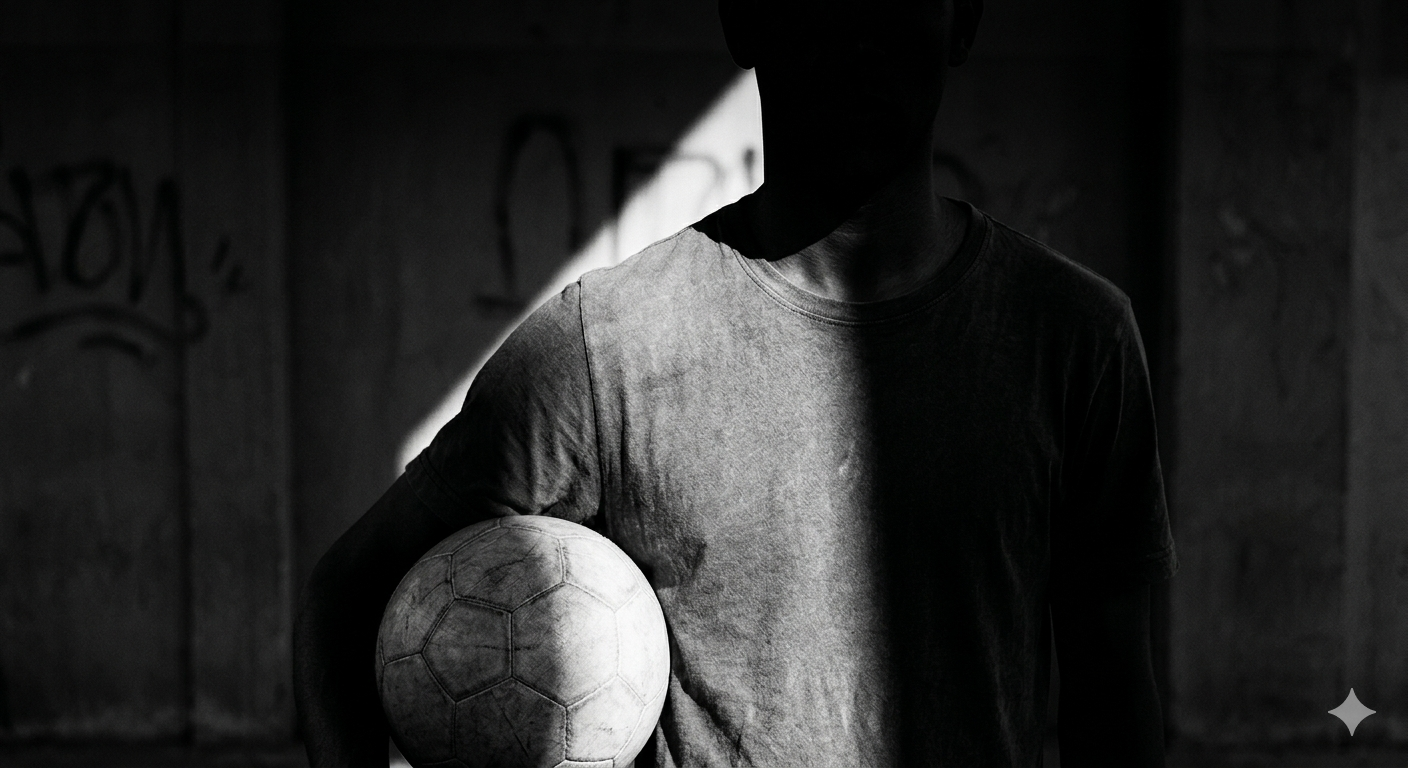
“The opium of the people.” Adapted from a phrase by Karl Marx, this expression treats football as a weapon of mass alienation, supposedly shifting focus away from what really matters. But what matters? Does football truly numb social consciousness?
There are contexts and then there are contexts. Personally, I see this discourse as having an elitist bias, diminishing the strength of a sport that, in Brasil, was embraced by the poorest layers of society despite the fact that, in the beginning, there was fierce resistance to allowing Black people to play in the country. Believe it or not.
And what would be the problem with the people bathing in this opium? Metaphorically speaking, of course. Football possesses a gigantic force and serves as a powerful tool for resistance and belonging. I am a Bahia supporter, it is the kind of passion that emerges from the very air you breathe or the ground you step on. The people of Southern and Southeastern Brazil have always looked at the North and Northeast with disdain, as if we were second-class citizens. Football and art (and football is art) were our forms of self-assertion and identity.
In the era of radio, the football broadcast to the interior of my state was dominated by the Rio-São Paulo axis. Our clubs were pushed to the background, yet the greats of Salvador resisted: mainly Bahia, Vitória, Ypiranga (club of my grandfather), and Galícia.
Football is accessible, it is beautiful, it is popular. It is also complex, strategic, and sometimes boring and slow. I grew up playing in the street, barefoot, and that is where I forged my personality: organizing teams, wanting to be on the winning side, arguing, seeking creative ways to win, and, above all, learning to accept defeat.
Often, a white intellectual appears legs crossed, drinking coffee and wearing a scarf with a face of disapproval whenever football is the subject, clinging to an elitist perspective of what deserves to be appreciated. I am reminded of the Mexican film “El ángel exterminador” I see these intellectuals as the bourgeois guests “trapped” in the living room after dinner, unable to leave even though there is no physical barrier stopping them. That film is wonderful in how it portrays the bourgeoisie and their closed, inaccessible world. I see a striking similarity in this intellectual elite.
Furthermore, lately, the sport has become a flashpoint for discussions on racism and xenophobia. Recent episodes involving Vinícius Júnior and Kylian Mbappé bring to the surface a debate that Europeans always try to avoid. They want to continue being racist in peace, within their comfort zone.
The universe of football has problems, plenty of them. Things aren’t what they used to be: over-exposure, surreal investments, corruption, money laundering, and associations with fascism (Trump even received a peace award from the FIFA president). All of this has made me quite discouraged. It shakes my relationship with the game.
But my contradictory side flourishes when I am at my club’s stadium watching the regional derby: BAxVI (Bahia vs. Vitória). Nothing is as atmospheric and special as that. Massive doses of beer and barbecue, small talk, and terrace chants bellowed at full volume. It is belonging, it is history, it is resistance, it is hate, and it is passion.
Any erudition is superficial if you have never scraped your knee on the asphalt while playing football.

1 Comment
Mario
Futbol is life, futbol is passion, futbol is belonging.